
AI disrupts tech team culture by automating routine tasks, phasing out familiar jobs while creating demand for orchestration, generative content, and prompt-driven creativity. Emerging roles like AI Orchestrators and video prompt specialists redefine collaboration, requiring teams to upskill in human-AI symbiosis amid remote work.
The Rise of AI Orchestrators
AI Orchestrators emerge as the pivotal role of 2026, coordinating fleets of autonomous AI agents across workflows like customer service or code deployment. These specialists integrate tools, resolve conflicts, and ensure ethical outputs, commanding 25-56% salary premiums over traditional developers.
In tech teams, they foster culture by enabling focus on strategy over execution, with agentic AI markets projected at $8.5 billion. Skills include multi-agent communication protocols and governance frameworks, blending engineering with soft leadership.
Demand accelerates in blockchain and AR startups, where cross-chain orchestration parallels AI agent management for seamless remote collaboration.
Explosion in AI Video Content Jobs
AI-generated video roles proliferate, with freelancers on Upwork crafting shorts for TikTok, Meta ads, and enterprise training using tools like Runway or Sora. Over 2,000 LinkedIn listings seek "Video AI Specialists" for storyboarding, lip-sync optimization, and viral scaling.
Teams shift from manual editing to prompt-refinement loops, boosting output 10x while maintaining creative control. This creates hybrid remote cultures where global creators collaborate via AI previews, reducing production timelines from weeks to hours.
In game dev and SaaS, these jobs integrate with Unity or Snapchat Lens workflows, demanding prompt expertise for AR filters and demos.
Prompt Scriptwriting as a Core Skill
Prompt engineering evolves into "AI Scriptwriting," where pros design chained prompts for narratives, videos, and interactive content, earning up to $335k as "Prompt Librarians." It becomes ubiquitous, embedded in product management and marketing teams.
Scriptwriters orchestrate AI for SEO-optimized reels or blockchain explainer series, turning vague ideas into polished assets. This role enhances remote team culture by democratizing content creation, with async prompt reviews replacing meetings.
Future variants include "Narrative AI Directors," unknown today but vital for personalized video in edtech and crypto onboarding.
Vanishing Jobs and Historical Parallels
Jobs birthed last decade—like Social Media Managers (peaking 2015-2020) and Junior React Developers (booming post-2016)—now decline as AI handles posting, A/B testing, and boilerplate UI code. Layoffs hit 20% of tech middle managers via workflow automation.
React roles flooded by bootcamps face obsolescence from no-code AI builders, mirroring how Flash designers vanished post-HTML5. Yet, this mirrors cycles: social media spawned from blogging, React from jQuery—new layers always emerge.
Implications for Tech Team Culture
Remote teams must pivot to "orchestration-first" cultures, training via peer simulations and AI sandboxes to build psychological safety around experimentation. Hybrid models thrive with outcome metrics over hours, as Gen Z prioritizes learning AI fluency.
Category | Fading Jobs (2016-2026) | Emerging Jobs (2026+) | Cultural Shift |
|---|---|---|---|
Content | Social Media Manager | AI Video Prompt Specialist | Async creation, global collab |
Development | Junior React Dev | AI Orchestrator | Agent oversight, ethical governance |
Management | Middle Manager | Narrative AI Director | Peer-driven, upskilling focus |
Creative | Basic Scriptwriter | Prompt Librarian | Human-AI symbiosis, rapid iteration |
Leaders foster belonging through "AI jam sessions"—virtual hackathons blending prompts and orchestration—ensuring culture evolves faster than tech. Adaptability defines thriving teams in this unnamed job frontier.
Here are two new tools that we expect will define new jobs in the coming years:
The Rise of Higgsfield AI
Higgsfield AI surges as a leader in 2026 video generation with WAN 2.5 and Cinema Studio, turning text/images into hyper-realistic clips with lip-sync, camera controls, and effects like bullet-time or disintegration. Features include real-time interaction, aperture simulation, and UGC factories for avatars/ads, slashing production time for TikTok or enterprise videos.
Creators praise its cinematic motion (40% higher watch-throughs) and predictions for hyper-personalization, fueling jobs in prompt-based directing and post-AI editing. In startups, it integrates with Unity for AR demos, boosting remote collaboration via shareable previews.
DaVinci AI's Generative Surge
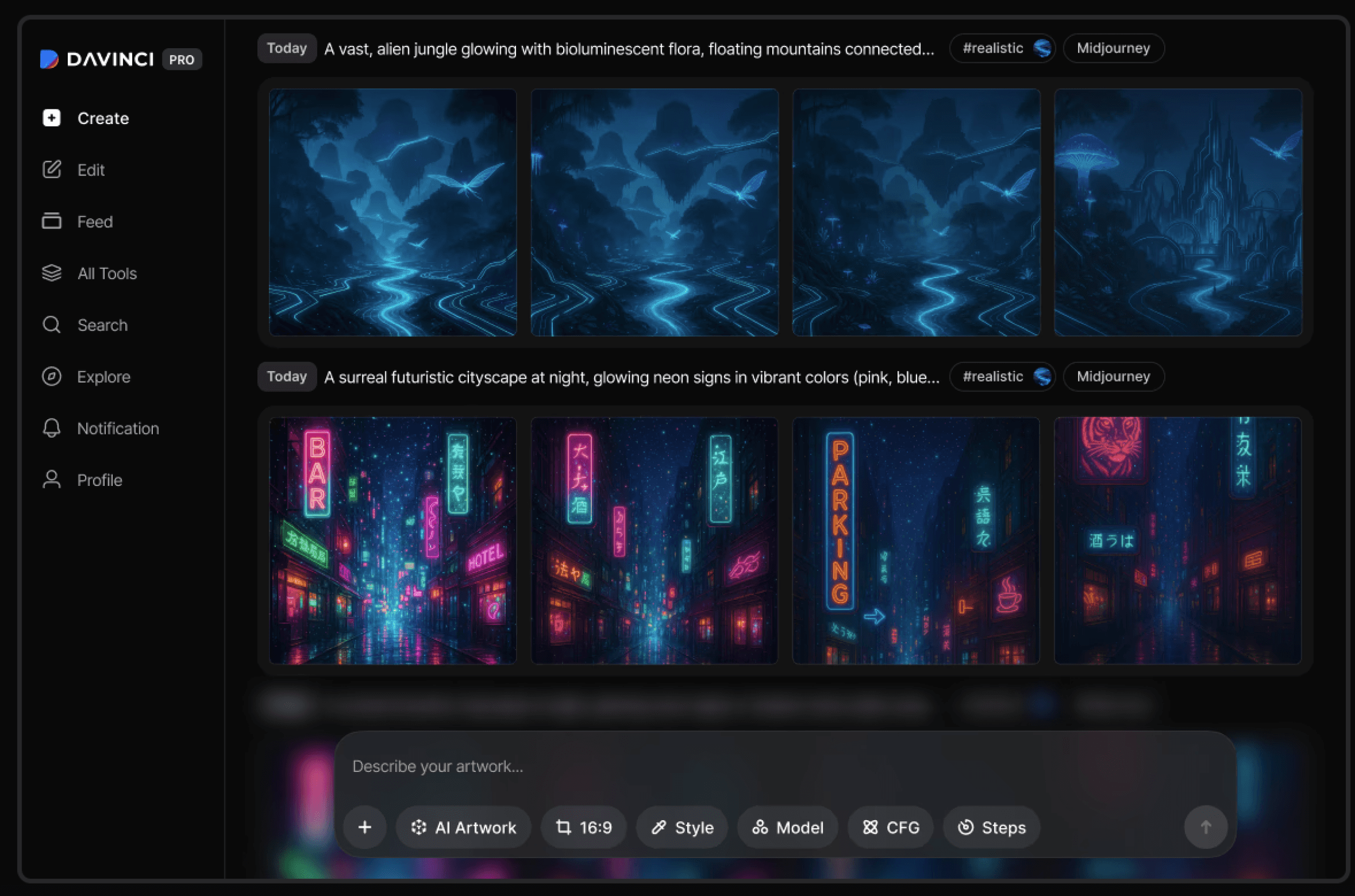
DaVinci AI dominates image/video art with DaVinci XL model, offering text-to-image, batch generation, scene composition, and prompt engineering for logos, tattoos, or visuals. Its Neural Engine powers facial recognition and super-scale, used by 1M+ for marketing and concepts.
Rising alongside Higgsfield, it spawns roles in texture customization and historical synthesis, blending into video pipelines for full AI content workflows. Tech teams leverage it for blockchain pitch decks or game assets, enhancing hybrid cultures with rapid iteration.